Spooktober, Day 18: Good Omens by  Terry Pratchett and Neil Gaiman

“Kids! Bringing about Armageddon can be dangerous Do not attempt it in your own home.”

Is Good Omens a horror story? No, it’s far too intelligent for that.

Good Omens (or, to give it’s full title Good Omens: The Nice and Accurate Prophecies of Agnes Nutter, Witch) was a unique collaboration between the late and much-missed Terry Pratchett and Neil Gaiman when the former was known principally as the author of The Sandman graphic novels. It is, in the broadest sense, a comedy about the end of the world.

The end times are near. An angel and a demon, who have become too fond of humanity conspire to swap a baby destined to become the Antichrist. The child grows up in rural Oxfordshire, where he learns the value of friendship while using strange powers to bend reality to his will as the Four Horsemen begin to gather. It is becoming clear that this has all been prophesied by a startling accurate and incredibly useless prophetess, the author of such unexpected insights as  “Do Notte Buy Betamacks”.

So no, Good Omens is not, strictly speaking, a horror story. But it’s a loving but critical send-up horror tropes, eschatology and prophecy. Gaiman and Pratchett’s joint fingerprints are all over it: the grisly postmodern twist on genre fiction of the former married to the knowing satire of the later. Good Omens could easily have been a stand-alone novel for either author, and we’re fortunate to have this one-time meeting of the minds. I’d recommend it to anyone who is a fan of either author or just fancies a good laugh at the absurdity of apocalyptic thinking.
Spooktober, Day 16: Frankenstein, by Mary Shelley

220px-Frankenstein's_monster_(Boris_Karloff).jpg

Today in Redundancy Theatre, we talk about how Frankenstein; or, The Modern Prometheus, the seminal novel by Mary Shelley, nee Wollstonecraft Godwin, that pioneered science fiction, and how it is Quite Good.
Does Frankenstein need a plot summary? Is there anything new to say about it? Shelley’s masterpiece has been imitated, adapted, ripped off and commercialised for so long that its plot has been hard-wired into the Western imagination. It’s the tale of a man creates life in his own image, only to reject it when he is horrified at its appearance, but he cannot escape his responsibility, and in the end, it destroys them both. Is it a metaphor for childbirth? Which is the real monster: Frankenstein or the creature? How might it have turned out if Frankenstein had owned up to his mistake? These questions have plagued the essays of English Lit students for decades, and no doubt will continue to do so for as long as the English language is in use.
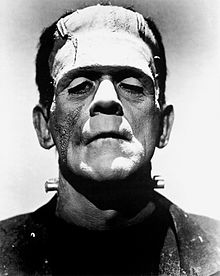
Maybe the reason Frankenstein has endured and prospered (besides Boris Karloff) is its thematic richness. Most of its themes remain relevant today. The idea that knowledge and the pursuit of progress can be dangerous in and of itself has echoed throughout horror media, from Lovecraft to The X-Files. The name “Frankenstein” has become shorthand for the notion that science must be limited by the bounds of conscience, of dangers of tampering in God’s domain: we still reach for the word to label our fears over genetically-modified crops and designer babies. The word itself conjures an image of lumbering, composite monstrosity— it’s telling that Shelley claims the idea came to her spontaneously in a dream, half-formed and uncreated, stitched together in a patchwork epistolary framework. Frankenstein was a breakthrough in the notion that horror doesn’t need to rely on the supernatural, on the fear of God and the afterlife: Victor’s undoing comes entirely from his own hubris, from the physical world that he sought to master and pervert. It’s a book that dared to transgress taboos regarding the human body, childbirth and abortion by presenting the creature as something half-formed and spurned, both by its creator and society. Nearly two centuries since it’s publication, Frankenstein retains its capacity to ask difficult questions and leave the reader uneasy. Familiarity and pastiche have not robbed it of its power.

(While doing the research for this post, I learned that Shelley was eighteen when she started wrote Frankenstein, and now I feel like my whole life has been a failure)

Spooktober, Day 15: The Atrocity Archives by Charles Stross

101869._UY500_SS500_.jpg

“Because, you see, everything you know about the way this universe works is correct—except for the little problem that this isn’t the only universe we have to worry about. Information can leak between one universe and another. And in a vanishingly small number of the other universes there are things that listen, and talk back—see Al-Hazred, Nietzsche, Lovecraft, Poe, et cetera. The many-angled ones, as they say, live at the bottom of the Mandelbrot set, except when a suitable incantation in the platonic realm of mathematics—computerised or otherwise—draws them forth. (And you thought running that fractal screen-saver was good for your computer?)”

The Atrocity Archives is the first book in the Laundry Files series by Charles Stross. It’s narrated by Bob Howard, a standard computer nerd who currently works for the British civil service, in a secret department known as the Laundry, whose remit is to protect Queen and Country from the threat of extra-dimensional threats to reality. They mostly deal with the unspeakable, gibbering horrors they face with an excessive amount of paperwork.

In the universe of the Laundry Files, magic is real, and it’s more trouble than it’s worth. Magic is in effect a highly advanced form of mathematics, algorithms that create portals to other realities and allow the Things within to slide through. The problem is that humanity is doing an awful lot of these magical calculations with the help of their computers, and as the population grows and the number of minds performing “magic” increases, the world edges closer and closer to the apocalyptic cataclysm known to the Laundry as CASE NIGHTMARE GREEN

I’m still not sure what genre to classify the Laundry Files as. Is it a comedy? Cosmic horror? Stale beer spy fiction? It’s all these things, and a lot more. Stross has Terry Pratchett’s gift of using comedy to make serious points: Bob makes wisecracks that will feel familiar to dorks the world over who feel frustrated with excessive bureaucracy. But it’s clear that there is a layer of horror beneath the laughs, as in the case of an ordinary couple who choose not to have children because when (not if) the stars are right and the Old Ones rise, they don’t want their offspring to suffer through it. It’s a smart, hilarious take on office culture, an exciting spy thriller and a genius deconstruction of Lovecraft’s worldview that I cannot recommend enough.

Spooktober, Day 14: House of Leaves by Mark Z. Danielewski

765501._SX540_.jpg

Okay, so, confession time: I haven’t actually finished Mark Z. Danielewski’s House of Leaves. So I’m not sure If I’m really qualified to comment on it, except to say that it’s really weird and really good, and it gives me a headache.
The plot, as far as I can tell, is formed by a series of narratives nestled within one another, distinguished by different typography, accompanied by enough footnotes to scare Terry Pratchett and a series of attempts at editorialising. A tattoo artist and unreliable narrator tell the story of how he discovered a manuscript that purports to be about a family’s discovery of the non-Euclidean space within their home and their tragic, misguided attempts to document it. And as the mystery deepens, the books itself starts to unravel— as in, the typesetting changes, so that entire pages might include only a few words, or a paragraph might be arranged into a triangle. It’s a bizarre, mind-shatteringly strange read, in which the very format of the page reflects how reality is warping inside the character’s home.
Somehow, I feel like I’m still not doing justice to House of Leaves. I’m still not sure it’s even a horror story or even a story in the conventional sense of the word. I can’t even fully recommend it: since the format is so inherent to the experience, the book tends to be expensive. But I think it’s worth tracking down and taking a look. It’s not for everyone: much like Gravity’s Rainbow, it’s so deliberately offputting that it might test your patience. But it’s also entirely unlike anything else you’ve read, a monstrous example of what can be done with books as a media. It helps that it’s superlatively written whenever it’s making sense. Just be brave and give it a go.

Spooktober, Day 12: Rebecca by Daphne du Maurier

rebecca.jpg

“Last night I dreamt I went to Manderley again.”

One of the themes that have come up repeatedly while writing these posts for Spooktober (“The Spooksiest Time Of The Year!tm”) is that great horror is not always about supernatural monstrosities invading our every day lives.

Nowhere is this more clear than in Daphne du Maurier’s classic gothic thriller, Rebecca.

It’s a tale as old as time: girl meets boy, girl marries boy, girl moves into boys expansive stately home in the country, girl finds herself haunted by the ongoing presence of boy’s impossibly glamorous ex-wife, girl is threatened by boy’s obsessive old housekeeper, boy’s house burns down. How often have we heard that tale?

It’s a novel about a haunting that doesn’t include a single (literal)  ghost. Rebecca herself is a presence and character despite her posthumous status:  Because so much of the action is going on in Mrs de Winter’s head, blurring the line between reality and imagination. She is a character in a constant state of anxiety, forever comparing herself to her predecessor and making assumptions about what other characters think about her. She is, in a sense, gaslighting herself, just as Mrs Danvers subtly undermines her self-confidence and keeps alive the memory of the former mistress. Du Maurier’s genius lies in her ability to build up this sense of unease into fear as the story progresses. Anyone looking to write horror or build tension would do well to read, study and absorb the lessons of Rebecca.

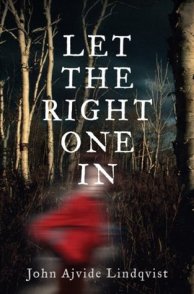
Spooktober, Day 11: Let the Right One In, by John Ajvide Lindqvist

943402.jpg

“Are you OLD?”

“No. I’m only twelve. But I’ve been that for a long time.” 

It’s 1981. Young Oskar is living with his mother, bullied at school and faces visits from his alcoholic father. Then he meets, Eli, the girl who’s just moved in next door, and he’s finally found someone who understands him. There’s only one problem: Eli is a vampire, and the man claiming to be Eli’s “dad” may or may not be a child molester who provides Eli with the blood they need to survive.

Let the Right One In works because like the best vampire stories, it’s not really about vampires. There are monsters-a-plenty in Lindqvist’s world, all of them terrifyingly real: bullies, alcoholics, neglectful adults and child molesters, to name just a few. Honestly, the horrors in Oskar’s life are so unsettling that a centuries-old haemophage looks positively quaint in comparison.

Maybe that’s why Oskar’s relationship with Eli works so well, since Eli is, strangely enough, the warmest and most sympathetic character in Oskar’s life. It subverts our expectations on the innocence of childhood, yet somehow reinforces them at the same time. Their relationship may be unconventional, but its also genuinely sweet and tender, and you can’t help but hope that their friendship will somehow endure the carnage going on around it.

Let The Right One In is a masterpiece of Scandi noir, an extended meditation on the dark side of the human soul. It’s unrelentingly brutal, which only serves to make its moments of joy gleam all the brighter. It’s essential reading for anyone who thinks vampire fiction has gotten “soft,” or for a crossover thriller with light supernatural elements. After all, not all monsters have fangs…

Spooktober, Day 10: The Ring, by Koji Suzuki

06-Sadako-1.jpg

‘Before you die, you see the ring…’

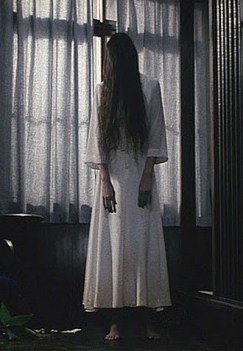
Today’s entry in our Spooktober marathon is going to be a little different because although The Ring was initially a novel by Koji Suzuki, I’m going to be talking mostly about the film adaptation(s). Why? Because The Ring is one of those rare anomalies where I honestly believe that the film adaptation is better than the original novel. Partly it’s because I’ve only read the book in translation; partly it’s because the films excise some of the more problematic aspects of the novel (including, the more sordid details of Sadako’s backstory, and Ryuji’s rather tasteless enthusiasm for sexual assault). Mostly I think it’s because this is a story that works better with a supernatural bent than a pseudo-scientific explanation: Sadako in the film is a ghost, in the Japanese tradition of vengeful onryo, rather than a combined electromagnetic/psychic manifestation of syphilis. But then, the first movie was directed by Suzuki himself, so it’s not like I’m downplaying his role by stating a preference for the film.

It’s also unusual in that the western remake is not only competent but arguably as good as the original. So whichever interpretation is your favourite is up to you.

In case you’re not familiar with it, The Ring is the story of a cursed videotape that kills anyone who watches it, and the desperate quest to find a way to stop it. Although it felt fresh and new to a Western audience, The Ring is actually working within a rich tradition of Japanese horror: ghoulish spirits seeking vengeance with power they never had in life; haunted, animated technology; the invasion of the everyday by the uncanny. It all reads like a subversion of the typical ghost story tropes, leading to an end that puts a genius (and savage) twist on the hope that appeasing the spirit will deflect its vengeance. Yet it’s also subtle: the Japanese film only features one horrifying moment towards the end, but I still had to stop and switch on the lights a couple of times while watching as the tension built but was never really allowed to deflate. It’s a work that lingers long after it’s over by playing on our paranoia, by stoking the fear that our everyday environment and all our technological comforts could be used against us.

Spooktober, Day 9: Maplecroft by Cherie Priest

851510149022922414.jpg

“This evil cannot hide from me. No matter what guise it assumes, I will be waiting for it. With an axe.”

Stop me if you’ve heard this premise before: a novel with notorious murderer Lizzie Borden as the protagonist, fighting Lovecraftian monsters from the sea. How many times have we heard that old chestnut?

The premise of Maplecroft by Cherie Priest is that Lizzie Borden was mistakenly charged with axe-murdering her parents, who had begun to transform into Things That Cannot Be. Now, Lizzie has retreated to her new home, Maplecroft, along with her sickly sister, Emma, where they keep an eye on the sea and guard against the encroaching hoards of fish-monsters. But the story is rooted in human drama: in Lizzie’s growing fatigue from caring for her sister while fighting monsters at night when all she wants is to spend time with her girlfriend. Emma, meanwhile, is determined to prove her worth as a biologist by sending away a sample her sister finds on the beach…

I love Cherie Priest: she has such a knack for narrative voice, for nailing the feel and tone of a place and time. She takes a premise that sounds far out on paper and manages to inject it with gravitas, filling the story with a creeping sense of dread as madness descends on the Borden sisters. Maplecroft is a beautiful hybrid of historical crime thriller and cosmic horror, and I’d recommend it to anyone looking for a little bit more from their Lovecraftian fiction.

Spooktober, Day 8: The Graveyard Book by Neil Gaiman

718246._SX540_.jpg

People want to forget the impossible. It makes their world safer.

I have become convinced that Neil Gaiman is some a wizard. Because every story he writes somehow seems so effortless, so easy to read but jam-packed full of imagination. The Graveyard Book may not be my favourite of his novels (*coughs*American Gods*coughs*), but it’s definitely his most accessible.

The Graveyard Book is the story of Nobody “Bod” Owens, who is orphaned in the intro by a serial killer and raised in a nearby cemetery by a family of ghosts and a reformed vampire. Most of the book is made up of a series of short stories and vignettes about Bod’s adventures growing up in the graveyard, encountering ghosts and witches and werewolves and a human girl who slowly tempts him to rejoin the world of the living. And if anyone of this sounds familiar: yes, it is based on Rudyard Kipling’s Jungle Book.

The Graveyard Book is a delight for all ages: it’s horror-themed without being too intense for young readers, while well-written and layered enough that it never feels “childish”. So if you’re looking for a break from all the terror of Halloween but still feel in the mood for something spooky, check it out.

Spooktober, Day 4: Dark Matter by Michelle Paver

Dark-Matter-jacket-600x887.jpg

When you think about it, the Arctic is the perfect setting for a horror story: it’s pitch dark for half the year, it’s isolated, and just about everything out there will try and kill you.

Michelle Paver’s Dark Matter tells the story of an expedition to the Arctic island of Svalbard. The narrator, Jack Miller, jumps at the chance to prove himself by joining a pack of Oxford graduates on their adventure north, to Gruhuken Bay, despite his worries about the class divide. The expedition is struck by bad luck from the outset, and the misfortunes pile up until every member of the team is forced to leave, leaving Jack on his own to mind the camp and keep the mission going. As if the cold and the darkness wasn’t enough, Jack has to face the possibility that Gruhuken isn’t as abandoned as he thought.

Dark Matter is a superb psychological horror story, focusing consistently on Jack’s worsening mental state. As Jack’s situation deteriorates, there is a growing sense that there must be something out there, some malevolent presence that wishes him harm. It’s written in the best tradition of psychological horror, ratcheting up the tension that something might happen without ever deflating it by showing the monster in the flesh. Indeed, It’s left ambiguous exactly how much of the events that are going on is real and how much is going on in Jack’s imagination.

I read Dark Matter over the course of a single weekend last year, and I can’t recommend it enough. It’s a traditional ghost story, full of ignored warnings and the gradual reveal of buried secrets, but the Arctic setting makes it feel fresh and original. A word of advice, though: make sure you wrap up warm and keep a dog nearby if you have one…

I’d also recommend Paver’s follow-up novel, Thin Air, which has a similar premise and style but is based on a mountaineering expedition in the Himalayas that left me dizzy with vertigo.