 I’m starting to worry about Solo: A Star Wars Story.
My fears are probably misplaced: Disney has so far had a strong batting average since it became the steward of Lucasfilm— to say nothing of its success shepherding Marvel. And to be honest, the thing that scares me isn’t the loss of the original directors, or complaints about Disney’s heavy-handed involvement, or concerns about the cast. The nagging doubt I have is that it may not be possible to do justice to the character of Han Solo in a prequel because Han Solo isn’t a hero yet.
The challenge that Solo faces is that it needs Han’s character needs to end up as we see him in A New Hope. And there’s no way around it, but Han Solo isn’t a hero at the start of Episode IV. He’s not even particularly nice: he’s a selfish, money-grubbing pirate. Han only offers passage to Alderaan to Luke and Obi-Wan to pay off his debts. He’s perfectly happy to sit out Luke’s plan to rescue Leia until he’s enticed with an offer of payment. And, yes, Han shoots Greedo in self-defence, despite the best efforts of George Lucas to make us forget.
The reason that the audience reacted poorly to Lucas’s retcon of Greedo’s murder is that it undermines Han’s character development. The whole point of his character arc is that he starts off as a despicable— if charming— scumbag, a low-life criminal, yet by the end of the film, enough of Luke’s idealism has worn off on the old smuggler that he’s inspired to risk his life to save his friends and destroy the Death Star. That’s the standard Hollywood formula: a flawed character learning to overcome their failings in the face of overwhelming difficulty.
The challenge, then, is how can Solo present Han becoming the unlikable cad he is in A New Hope in a way that doesn’t alienate him to the audience. Solo has to end with its lead character as the selfish murderer that Luke meets in the Mos Eisley cantina. There are plenty of examples in fiction of narratives that centre around unpleasant yet fascinating characters and their fall into darkness: one only needs to think of from Macbeth or Breaking Bad to realise that Lucasfilm could pull off this kind of narrative arc. The problem is that falls from grace are by definition tragic, and I doubt that Disney wants it’s second Star Wars anthology to leave the cinema feeling bummed out. This is going to be fun-filled, action-packed romp, full of knowing glances and memetic one-liners, not a heavy-handed character study about how a wide-eyed young pilot became the scruffy-looking nerf herder who fried Greedo on sight.
Maybe that’s why so many prequels disappoint. The resolution to great fiction should be “surprising yet inevitable:” that is, the ending should surprise the audience, but in a way that makes it clear that this was always the way things were going to go down. We’re surprised that Frodo cannot bring himself to destroy the ring, because the sheer weight of narrative causality would seem to compel the hero to fling the source of the villain’s power into the fire; yet somehow, it seems inevitable that the Ring would seduce Frodo, because we’ve seen its influence over the course of three books/movies. The problem with this is that it’s hard to surprise the audience when we know how the story is going to end. It’s an issue that Star Wars itself has faced more than once, most notably in the prequel trilogy where the transformation of Anakin Skywalker into Darth Vader was a foregone conclusion, yet it was difficult to square how the character went from petulant adolescent to cold-hearted space-tyrant. Even Rogue One, a film that sticks its landing with far more success than the earlier prequels, was a foregone conclusion: the rebels get the Death Star plans, and the only surprise was the gradual realisation that the film’s heroes were not going to make it out alive.
I’m going to see Solo whatever happens. I’m probably going to love it. I may end up taking back every word I’ve just written come May, like when I said I wasn’t going to watch Game of Thrones anymore. I just wonder if a film detailing the early life of Han Solo is necessarily the slam dunk it appears to be at first glance.
Maybe they should have just made the film about Lando?
 “She had a ghostly pallor and a dreadful expression, she wore clothes that were out of keeping with the styles of the present-day; she had kept her distance from me and she had not spoken. Something emanating from her still, silent presence, in each case by a grave, had communicated itself to me so strongly that I had felt indescribable repulsion and fear. And she had appeared and then vanished in a way that surely no real, living, fleshly human being could possibly manage to do.”
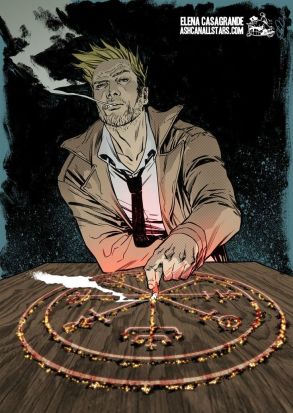 “I’m the one who steps from the shadows, all trenchcoat and cigarette and arrogance, ready to deal with the madness. Oh, I’ve got it all sewn up. I can save you. If it takes the last drop of your blood, I’ll drive your demons away. I’ll kick them in the bollocks and spit on them when they’re down and then I’ll be gone back into darkness, leaving only a nod and a wink and a wisecrack. I walk my path alone… who would walk with me?”
 “The eeriness of this lonely island, set among a million willows, swept by a hurricane, and surrounded by hurrying deep waters, touched us both, I fancy. Untrodden by man, almost unknown to man, it lay there beneath the moon, remote from human influence, on the frontier of another world, an alien world, a world tenanted by willows only and the souls of willows.”
 Some of the best (and, it must be said, worst) horror stories that I’ve read in recent years have come from the Internet. They have a way of floating around on forums and message boards, spreading from user to user like the digital equivalent of campfire stories, primed to deliver a short gust of terror running down your back.
 “I’m a werewolf trapped in a human body.”
 The Cabin In The Woods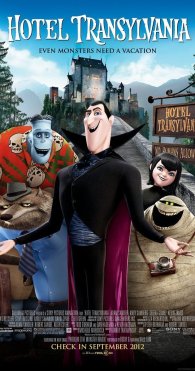
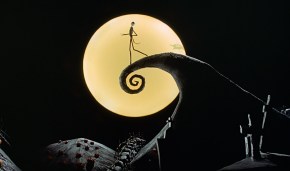 The Nightmare Before Christmas
 Dracula (1931)


 PBE Welsh