Blog

Spooktober, Day 5: The Haunting of Hill House by Shirley Jackson

8739042212_23c187a117_b.jpg

The Haunting of Hill House by Shirley Jackson is the haunted house story. Its influence echoes throughout every form of media,  in every story dealing with a haunted location. From The Shining to Silent Hill, entire generations of writers have taken influence from Jackson’s iconic locale, a house that is itself a character as much as a setting. It has been adapted for film twice, with a third coming to Netflix: the 1963 version, The Haunting, is recognised as one of the classics of horror cinema. The 1999 version… is not.

Jackson sets out her stall in the opening paragraph, cited by Stephen King as one of the best in English literature:

“No live organism can continue for long to exist sanely under conditions of absolute reality; even larks and katydids are supposed, by some, to dream. Hill House, not sane, stood by itself against its hills, holding darkness within; it had stood so for eighty years and might stand for eighty more. Within, walls continued upright, bricks met neatly, floors were firm, and doors were sensibly shut; silence lay steadily against the wood and stone of Hill House, and whatever walked there, walked alone.”

The story centres around the four characters who dare to stay within the walls of Hill House: a paranormal investigator; a nervous recluse; a bohemian artist; and the duplicitous heir to the property. During their stay, they all experience strange events and begin to uncover the sordid history behind the house, and by the end, the reader is still left wondering how much is real and how much is imaginary.

The Haunting of Hill House is a touchstone of the horror tradition. It understands that nothing is more frightening than whatever the reader can imagine. Jackson’s gorgeous, literary prose gives away nothing: it’s never made explicit whether the events that the characters perceive are real or just products of the strain on their minds. Its genius is that it recognises that no horror on the page can ever match what we create ourselves. It’s a book that forms a psychic echo chamber around the reader, which allows our own worst fears to rattle around inside, becoming larger and more potent with every moment. It is a vital, compelling book that everyone who is interested in reading or writing horror should read.

And as luck would have it, it’s currently on sale for Kindle.

Spooktober, Day 4: Dark Matter by Michelle Paver

Dark-Matter-jacket-600x887.jpg

When you think about it, the Arctic is the perfect setting for a horror story: it’s pitch dark for half the year, it’s isolated, and just about everything out there will try and kill you.

Michelle Paver’s Dark Matter tells the story of an expedition to the Arctic island of Svalbard. The narrator, Jack Miller, jumps at the chance to prove himself by joining a pack of Oxford graduates on their adventure north, to Gruhuken Bay, despite his worries about the class divide. The expedition is struck by bad luck from the outset, and the misfortunes pile up until every member of the team is forced to leave, leaving Jack on his own to mind the camp and keep the mission going. As if the cold and the darkness wasn’t enough, Jack has to face the possibility that Gruhuken isn’t as abandoned as he thought.

Dark Matter is a superb psychological horror story, focusing consistently on Jack’s worsening mental state. As Jack’s situation deteriorates, there is a growing sense that there must be something out there, some malevolent presence that wishes him harm. It’s written in the best tradition of psychological horror, ratcheting up the tension that something might happen without ever deflating it by showing the monster in the flesh. Indeed, It’s left ambiguous exactly how much of the events that are going on is real and how much is going on in Jack’s imagination.

I read Dark Matter over the course of a single weekend last year, and I can’t recommend it enough. It’s a traditional ghost story, full of ignored warnings and the gradual reveal of buried secrets, but the Arctic setting makes it feel fresh and original. A word of advice, though: make sure you wrap up warm and keep a dog nearby if you have one…

I’d also recommend Paver’s follow-up novel, Thin Air, which has a similar premise and style but is based on a mountaineering expedition in the Himalayas that left me dizzy with vertigo.

Spooktober, Day 3: “Oh, Whistle and I’ll Come to You, My Lad,” by M R James

James_-_Ghost_Stories_of_an_Antiquary_page_252gray.jpg

Ever since I was little, I’ve suffered from night terrors.

I have no idea why, but now and then I’ll wake up screaming in the middle of the night, filled with fear that sends me sprinting for the light switch to banish the unseen monster that I could have sworn I saw just a moment ago. For the most part, it’s an embarrassing foible that I have to explain to anyone else sleeping in the same room, just in case. I’ve noticed that the problem has been ameliorated now I’ve placed my teddy bear on guard duty over my bed, to keep a vigilant eye out for the nightmares.

It’s easy to scoff at the things that go bump in the night in the middle of the day, but it’s much harder to shake when your brain is half asleep. And that’s why “Oh, Whistle and I’ll Come to You, My Lad” by M R James hits so close to home

The ghost stories of M R James follow a pretty standard pattern: a curious scholar pokes their nose where they don’t belong, and has an uncomfortably close encounter with some gribbly and unexplained horror. There’s physicality to his stories, a sense that the supernatural has a real presence, and all you have to do is reach out a little too far to wake it up…

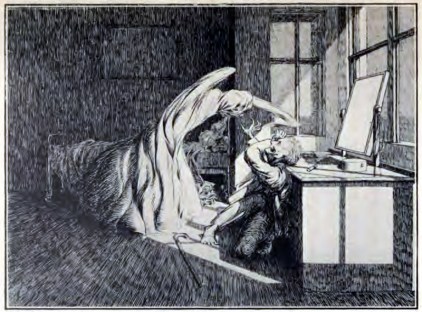
“Oh, Whistle and I’ll Come to You, My Lad,” aside from having one of the most awkward titles imaginable, is a good example of James’ style. It tells the story of Parkins, a sceptical academic who visits the seaside and stumbles across a whistle covered in Latin inscriptions (always a good sign) and then dreams of a sinister presence following him. At the story’s climax, Parkins turns to see that his bedding has turned against him, animated by a malevolent force that all his scholarly reason cannot explain.

My experience with night terrors gives me some insight into Parkins’ situation. I can understand the conflict going on in Parkins’ mind, between his rational desire to explain away the visitation and the evidence of his eyes because I’ve felt the same way. I’ve felt the immense feeling of dread that wakes me up in the middle of the night and sends me darting to the door. And while still caught in the grip of REM sleep it’s easy for a half-dozing brain to pick out patterns in the darkness, shapes and faces. I’ve seen the faces of ghosts in shirts hanging from the cupboard, in the way a red electric light shimmers on the wall. The sleeping brain plays tricks on you, looks for patterns around you as it searches for threats around it.

Sleep well…

Read “Oh, Whistle and I’ll Come to You, My Lad,” by M R James here. You can watch the 2010 BBC adaptation starring the late John Hurt here.

Spooktober Day 1 and 2: Carrie and The Fall of the House of Usher

Welcome to Spooktober!

I love Halloween. There’s something about the way the light changes at this time of year that makes me feel like anything is possible, that there is still magic in the world: even if the magic isn’t always something you’d want to encounter.
Now that October is upon us, and since I’m not rational in my love for all things Halloween-y, I thought it would be fun to talk about some of my favourite scary stories over the next month. I’m hoping to cover one a day, and I haven’t decided if I’m going to allow examples from media besides prose fiction (so many video games…), so I guess we’ll have to see what happens.
Anyway, since we’re already two days in, I’ve got some catching up to do, so for today, I’ve jotted down some thoughts about two of my favourite horror stories. Let me know what you think!

10592.jpg

1. Carrie by Stephen King

Alfred Hitchcock once observed that “there is no terror in the bang, only in the anticipation of it.“ Fear doesn’t come from jack-in-the-box jump scares, but from the effect that it has on our nerves, the fraying sense that at any moment Something Will Happen.
The beauty of Stephen King’s debut novel, Carrie, is that we can all see the tragedy coming.
Using a quasi-epistolary format— cribbed interviews and newspaper clippings that hint at an awful tragedy that hasn’t happened yet. The tension builds and builds as teenage outsider Carrie White is bullied by her peers, terrorised by her fundamentalist mother and neglected by her teachers, while at the same time developing her mysterious powers of telekinesis.
The book makes no secret of the fact that something terrible is going to happen at the prom. The story seems to unfold in slow-motion, like watching a car crash: we wish we could stop it, but there’s nothing we can do to stop it.
Carrie is a novel that has only become more relevant in an age of cyberbullying and school shootings: one of King’s great strengths is his capacity to root horror in the mundane. His characters are real people, real specimens of the human condition: King roots horror in the human condition: no one is innocent, and most of his characters are despicable, yet relatable. It’s far too easy to see ourselves in Carries’s teachers and classmates, whether we want to admit it or not: the horror becomes all too personal when we have to ask ourselves if we would have behaved any differently.
It’s this mundanity that gives Carrie its edge. If you were to lift out the supernatural elements from Carrie and it still works as a terrifying object lesson in how not to treat people, a chilling account of a young woman finally snapping under pressure. After all, if the horror’s of today’s society have taught us anything, it’s that no one needs psychic powers to become a monster.

800px-Aubrey_Beardsley_-_Edgar_Poe_3.jpg

2. The Fall of the House of Usher by Edgar Allen Poe

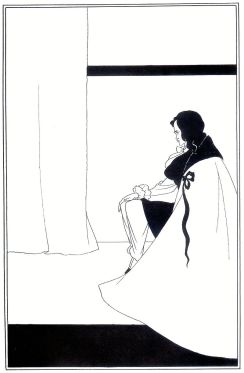
For the most part, Edgar Allen Poe eschews cheap scares in favour of tension and uncomfortable meditations on the dark side of the soul. There’s a lot to talk about in The Fall of the House of Usher, a remarkable feat given its short length: how Poe uses macrocosm and microcosm to reflect the mindset of his doomed characters, the metafictional elements, the subtext of psychological decay and hypochondria. But there’s something more specific that made the story stick in my head.
The Fall of the House of Usher is the first instance I can remember reading a jump scare in a book.
There is a moment towards the end of The Fall of the House of Usher that just clicks, where everything in the story comes together and the reader finds out exactly what is going on, and why Roderick Usher is so disturbed. I won’t give it away— it won’t take long to read, and it’s readily available in the public domain— but it’s always struck me as remarkable that Poe was somehow able to make me leap in my seat without all the tools that visual media like film has at its disposal
The scare feels all the better for feeling earned: it works because the author has built up to it, and understands that one good scare is all a story needs, that it’s enough to simply leave the reader in anticipation of the next fright without ever delivering a knockout blow.

Seven Civilisations That Should be in Civilization VI

Now that Take Two have introduced four factions as DLC, the pattern of their releases is starting to become clear. It might be too early to assess any pattern to Firaxis’ ongoing release plans, but so far they’ve proved consistent with the base game by maintaining a balance between returning civilisations like Poland and Persia and introducing new ones like Australia and Macedonia (Admittedly, the latter is led by Alexander the Great, so it’s not that new). Similarly,  when Civilization VI launched last year, it included some familiar faces like Teddy Roosevelt’s America, Gandhi’s India and Montezuma’s Aztecs. On the other hand, we’ve also seen some left-field choices like Scythia and the Kongo, and new leaders for the returning classics, with the Romans led by Trajan for the first time, and Catherine Medici now rules the French, (even though she was Italian). It’s like Firaxis are making a special effort to dig deeper into history and look for cultures and play styles that they haven’t included before. That’s great: I’m glad to see the developer working on ways to encourage diversity, both in representation and in the playstyles available. But why stop there?

Here, I’ve collated seven cultures that have never appeared in a Civilization game before. Some of them might be familiar as city states or as off-shoots of other civs, but all of them have something to contribute, whether it’s an interesting play mechanic or a unique feel. Please feel free to mention any other civs you’d like to see in the comments.

1. Switzerland

Ah, Switzerland. Home of fondue, cuckoo clocks and an uncomfortably large stockpile of Nazi gold. It’s a little surprising that the Swiss have never made it into Civilization so far. Maybe it’s because unlike the rest of Europe they’ve spent the last four centuries studiously avoiding war, living at peace with their neighbours and eating chocolate instead of conquering the southern hemisphere. Whatever the reason, no other country in Western Europe has been so overlooked by the developers of Civ as Switzerland (except for Belgium. Poor Belgium).

Whatever the reason, Switzerland should be a tough nut to crack in the game. In Switzerland, every adult receives training in the army and is expected to keep their guns at home, just in case any of their neighbours gets any ideas about sending tanks up the Alps.  How does this work in-game? What it the Swiss received a bonus whenever they’re not at war— like the ability to cross mountains, a great advantage that gives Switzerland an edge while encouraging them to play nice with everyone else? Other bonuses could benefit their civics tree— Switzerland is famous for its tradition of direct democracy, where the people decide on everything from voting reforms to the price of books to whether it should be illegal to drive on Sundays. An advantage when choosing social policies would make the Swiss very flexible— a lot like those knives they give their soldiers.

2. The Timurids

Every Civ game has to have that one civ that no one wants to have as their neighbours. Names like Montezuma, Attila and even Gandhi are enough to send a lot of players into a cold sweat. These are the guys that will never be happy until they’ve declared war on you six times, nuked your cities and carted your last worker unit back to their capital, all the while laughing as you flail pathetically against them.

Tamerlane would make all these guys look like amateurs.

Timur the Lame was a warlord from Central Asia who took one look at his forebear Genghis Khan— the man who conquered everywhere from the Pacific to the Black Sea— and said: “yeah, I can beat that.” He very nearly did. His Wikipedia article reads like a police report on a serial killer: take for example the way he treated the people of Isfahan when they didn’t want to pay their taxes: Timur responded by massacring the populace and built towers out of their skulls outside their walls. And when he sacked Baghdad he issued standing orders to his men to bring back two severed enemy heads. Each. When he invaded India, his opponents decided to rattle his soldiers by using elephants against them. So Timur decided to scare the elephants by charging his camels at them.

Doesn’t sound like much? Did I mention that the camels were on fire?

The estimated casualties ofTimur’s wars might reach as high as many as seventeen million people. That might have been as much as five percent of the population of the Earth at the time. He was so scary that his tomb is said to be cursed: when the Soviets unearthed his remains, they found themselves at war with Nazi Germany three days later, and the Russians only started to win again once they had the sense to but his haunted bones back where they found him.

In the game, the Timurids would be a natural successor to the Mongols and the Huns: an all-out, death-or-glory rushing civ with bonuses when attacking cities (and elephants). But Timur had another side to him: he was a great patron of the arts and intellectuals who oversaw the beginning of a golden age in Persian art. Well, there’s nothing like burning stack of skulls outside your window to inspire you, is there?

3. Israel

This one’s likely to be difficult, since I doubt Firaxis want to leap into the acid bath that is the commentary on Israel. But let’s pretend for the sake of a list on the internet that we live in a better world because there’s a real opportunity here.

Israel doesn’t lack for potential leaders: the chances are you’ve probably heard of a few, like the guy with the sling and his famously smart son. If Firaxis are feeling brave, they could even go with a certain king who may or may not have ordered the murder of a whole load of babies.

In gameplay terms, Israel would be best suited towards a defensive strategy: this is a nation that survived for hundred years against the best the world had to throw at it. Israel survived invasion, occupation and assimilation from the Assyrians to the Persians to the Greeks, before the almighty Borg cube that was the Rome Empire finally absorbed it. Even then, the Israelites put up a hell of a fight: at the siege of Masada, nine hundred Jewish rebels held out for months against nine thousand Roman soldiers, before choosing to kill each other rather than surrender. But Israel’s also famous as a centre for religious devotion, with a long, long list of religious figures and prophets calling it home: maybe the in-game civ has a bonus towards generating great prophets, or a stubborn refusal to be converted to another civ’s religion. These bonuses would synergise well in a civilisation that gains strength and produces culture from protective structures: this is the home of the Walls of Jericho, after all.

4. The Normans

This one’s up for debate since throughout its history Normandy has been part of the France, which is already in Civ VI.  And the Normans were certainly very French: they spoke French, swore loyalty to the French king, built castles and cathedrals and did the sort of stuff you expect in an average episode of Game of Thrones. But hey: if Civ VI can have three civs that all speak English, it can manage to squeeze in another one that speaks French.

It would be a shame to exclude the Normans on a technicality since they were among history’s all-time greatest badasses. The Game of Thrones comparison is not much of an exaggeration: George RR Martin has admitted that he based the Targaryens in part on the House of Normandy (though presumably, he made up the bit about the dragons). The Normans were originally Vikings who settled in northern France and promised the French king that they’d help to keep the other Vikings out, in one of history’s greatest protection rackets. After that they were causing trouble just about everywhere in the medieval world: whether conquering southern Italy, leading the Crusades or fighting as mercenaries for the Byzantine emperor, the Normans were the Middle Age equivalent of an out-of-control stag party, drinking and fighting everywhere they went.

Then there was that time that a bunch of them shot the English king in the eye and took his country. You might have heard about it.

In the game, the Normans would be natural raiders, leading knightly charges or peppering their foes with longbow fire: bonuses to pillaging tiles and resources would make sense. But the Normans were also renowned as builders, so they’d be well suited to bonuses when creating castles and churches.

There’s only one choice for who could lead this boisterous band of brigands: after all, how many leaders in history can you honestly say was a real bastard without getting into trouble from a history teacher?

5. The Phoenicians

Carthage has been featured in every Civ game since the second, whether in the base game or expansions. But if Firaxis feel like making a change (or they’re running out of Carthaginian city names), they may want to widen the scope to include Phoenicia as a whole Carthage was the most successful colony founded by the Phoenicians— merchants, traders and sailors from the city-states of the Levant (modern Lebanon). From their home cities of Tyre, Sidon and Beirut, their trading network spanned the whole Mediterranean Sea, reaching as far as Spain and Somalia. They made their name as the middlemen of the ancient world by buying silver from Spain, gold from Egypt wine from Greece and selling their monopoly on Tyrian dye.

Besides making themselves very rich, the Phoenicians have many accomplishments to their name. They were one of the first civilisations to use a recognisable alphabet, which they introduced to Europe. Their cities were run by oligarchies and the rule of law at a time when the rest of the world was still under the sway of god-kings and pharaohs. They were the first people to sail around Africa. They practised sacred prostitution. They sacrificed their children to gods that they didn’t so much worship as cower in terror from in the hope they’d go away. And then there are the things that Carthage got up to, like Hannibal crossing the Alps with his elephants to scare the heck out of the Romans (some of the elephants even survived!).

In Civ VI, The Phoenicians should be a terror on the ancient seas, with advantages when building (and sinking) ships.   They should benefit from a robust trade network and bonuses based on collecting and selling luxury resources. Stay home, build your ships, get rich, and if anyone argues you can send in the elephants.

6. Florence

Strangely enough, the Civilization series is that it has never featured Italy as a united nation. That’s probably a quirk of history since there was no united Italy for some fourteen hundred years between the fall of Rome and the nineteenth century. Two of the most prominent Italian cities— Rome and Venice— have been featured in past instalments, and there are a dozen others that they could feature in the future, but surely there is no other Italian city crying out for attention like Florence.

Anyone who’s played Assassin’s Creed II knows why Florence should be in Civ. Think of the people who made Florence their home over the centuries: Botticelli; Machiavelli; Dante (not that one!]); Leonardo; Michelangelo. The list of artists and thinkers that lived in worked in Florence reads like a Who’s Who of genius (and potential names for Ninja Turtles). Under the leadership of the Medici banking clan/crime syndicate, Florence became the epicentre of the Renaissance that dragged Europe out of the Middle Ages and into the greatest cultural flourishing the West had seen since Rome. The Medici banking network stretched across Europe and beyond, and the richer the Medici became, the more money they had to pimp out their city, and the more time Leonardo had to spend in his workshop painting women with strange smiles and inventing helicopters and death rays in his spare time.

But Florence was never a massive world power, and in Civ VI Florence could take a cue from the way Venice played in Civ V and be limited to one city. A one-city Florence would challenge the player to plan ahead, to build an unassailable artistic legacy with only one city to fall back on. Financial bonuses would be a necessity, but Florence should be in a position to thrive as a cultural powerhouse, with extra points towards great artists and no limit on the number of artworks they can put in their museums. And if anyone feels like bullying them or carrying off the treasures of Florence for themselves, well, the Medici can always afford to pay them off…

7. The Nazca

The Nazca culture flourished in Peru in the first millennium AD. They didn’t build cities— they closest they had was a cult centre at Cahuachi that was mostly a temple complex/marketplace, and not a place where people lived or worked— it was certainly a lot smaller than the great pre-Columbian cities of Mesoamerica and the Andes. But the Nazca still managed to leave behind some of the finest artwork in the Americas: beautiful pottery and textiles, finely crafted and inlaid with images of animals and their gods.

None of which are as interesting as the Nazca lines.

The Nazca desert is home to hundreds of gigantic images etched in the sand— most are quite small, but the largest stretch for about a third of a kilometre and the only way to see them is from an elevated vantage point. Some of them are simple lines or shapes, but the most famous depict monkeys, birds, whales and people. It’s like finding a lost Banksy piece on a humongous scale. What’s fascinating about them is that no one is exactly sure what the Nazca people made them for. Were they used to calculate the movement of the heavens and the time of year, like Stonehenge? Were they meant to communicate with the gods, looking down on humanity from an unimaginable height? Were they designed to provide a landing strip for alien spacecraft (probably not)? We may never know.

It would be great to see the Nazca lines in Civ as a tile improvement for otherwise useless desert tiles, generating extra faith, culture and tourism. As for other benefits: the Nazca had a reputation for collecting heads. It’s not clear if this had a ritual purpose or they just wanted to keep the heads of their enemies as trophies, but it could provide the basis for a unique unit that would scare the heck out of their enemies.

Why we still need guides in video games

Why do games still need guides?

We live in a time when games are becoming harder to learn. Developers rely on end-users having at least some familiarity with the tropes of modern games. But every game released is also someone’s first game, and something as simple and taken for granted as twin-stick controls— “left stick=motion, right stick=camera”— can be bewildering to the user who has never played a game before. And if a user cannot get over the relatively straightforward hurdle of two analogue sticks working independently, they are unlikely to stick around for a hundred-hour open-world action-adventure.

So tutorials are necessary, but they are also unpopular: for those who are familiar with games, they are a speed-bump to the action, a hoop-jumping exercise that gates off the rest of the experience, a sign reading “You Must Be This Leet to Proceed.” Thus, among games marketed towards the more “hardcore” end of the market, there has been a been a backlash against excessive tutorialising. The popularity of Dark Souls— along with its imitators and successors— has shown there is a market for games that don’t hold the player’s hand. Indeed, some games have begun to go out of their way to obfuscate the critical path and even invite actual dishonesty: think of Dark Souls and it’s in-game community feedback that ranges from the helpful to the trollish with all the unpredictability of the modern internet. In the vernacular of the day, games are moving (Linked Comment)into a “post-truth” world: Simon’s Quest, with its duplicitous NPCs, begins to seem eerily prophetic. There is perhaps no clearer bellwether for this trend than Nintendo, whose reputation for providing a helping hand reached a peak with Donkey Kong Country Returns, which offered struggling players the option to have stages literally play themselves. Even Nintendo has changed with the times, as shown in The Legend of Zelda: Breath of the Wild. Whereas previous Zelda games suffered ridicule for a series of expository mascots designed to dictate Link’s every move, Breath of the Wild throws the player right into the deep end of a broken world with minimal instruction and expects the player to swim or sink on their own

In this environment, guides have paradoxically become more important. As the trend towards understated and unforgiving experiences grows, it becomes a barrier to entry to many consumers, which is a shame given how much artistic prowess, world-building and atmosphere is crammed into games like Breath of the Wild and Bloodborne. But doubling down on tutorials or lowering the difficulty risks alienating the core audience for such titles. How do game makers square this circle: appealing to a large yet niche audience while still inviting in new players?

It is neither realistic nor fair to expect every player to “git gud”— that is, to put in the time and the sweat to the skills they need to engage on a game’s terms. The time constraints placed upon the modern audience for games are extensive— from jobs to study to family and social obligations. Not everyone has the time or the ability to dedicate to mastering every game they may want to play. Guides serve to ameliorate a lot of the frustration of gaming’s learning curve, acting as both safety net and roadmap for anyone who would otherwise be put off by a title’s reputation for putting up a challenge.

Guides have a  great advantage that they have over tutorials and difficulty sliders since they are opt-in: the agency lies with the player, not the developer, as it is the user’s choice to consult a guide. Likewise, those looking for a challenge can simply choose not to look at a walkthrough, or only seek one out for a particular section or problem when their experience turns to frustration. Guides let the player set the terms for their experience, without suffering undue frustration, learning things they already know, or suffering the humiliation of losing an achievement when they adjust the difficulty.

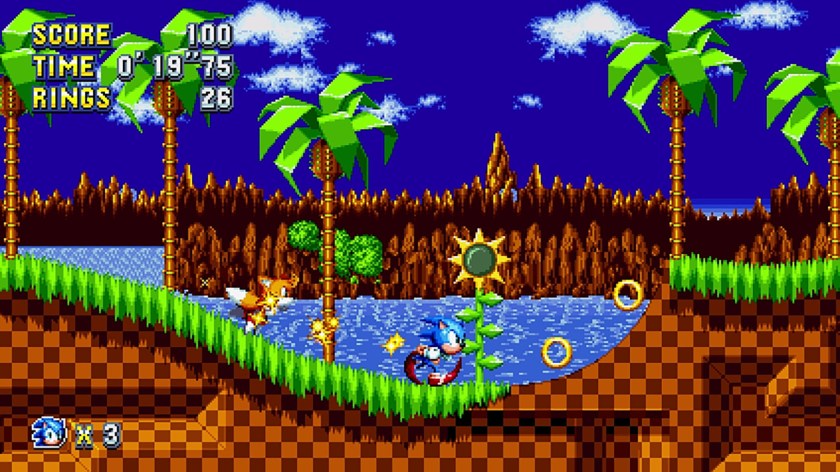
Guides, then, are here to stay. But why is it that traditional outlets still feel the need to publish them? One might well wonder what the point of posting a guide is when the answer to any question is as simple as typing “Sonic 3 Carnival Night Zone help” into Google to find a dozen answers from the community.

At a time when the truth has become a valued commodity on the internet, the quality of guides is more important than it has ever been. Outlets have to compete not only with the glossy artbook/guide hybrids released by Prima but also with dozens of user-submitted FAQs that are available online for free. It is critical to strike the right balance when producing guides that are informative and accurate (especially when any mistake risks going viral) while also recognising that guides are content, that they must be engaging, entertaining and drive clicks on the outlet’s website. The guide writer must be subject both to the peer review expected of an academic and to the approval of an audience looking for entertainment. It is not easy work, but it is important, and it will remain vital for as long as video games have to compete for time with the uncertainties of modern life.

Celebrity Service

I knew who Melody Anders was before she entered the shop. How could I not?  I’d seen a few of her films— the sci-fi stuff, mostly, not the romcoms. I’d seen her face plastered on every bus, every day on my way to work. Even snuck a peak at her in magazines at the barbers or in doctors’ offices: look, I’m only human. Who hasn’t spent a few idle moments here and there wondering what it would be like to meet the most beautiful woman in the world?

Never in a hundred years would I imagine I’d see her walk into my store, and smile that Fort-Knox-gold smile at me like we were old friends.

Her agent had made the call a couple of days ago.

‘Is that McTavish Whiskies in Edinburgh, Scotland?’ Except the woman on the phone pronounced it “Edinburg,” to rhyme with “Pittsburg”. She asked if we’d be happy closing the store for an hour or two, so that Melody Anders could shop in peace, away from the paparazzi and the autograph hunters. If Dad had been here, there would be “nae way in Heav’n n’Earth Ah’m closing’ this shop so some stuck-up Yank bint can wander aimless fer an hour,” but he wasn’t here. He was in Tenerife. I was in charge, and it was my choice to make.

I said no.

The woman on the phone— Linda, was it? — asked why.

I said that at McTavish Whiskies we aimed to treat all our customers to the same level of excellent customer service, and we couldn’t possibly turn away paying customers for the sake of one individual, no matter how famous she might be.

Linda told me how much Miss Anders was looking forward to this visit. She said that Miss Anders loved our whisky, that she imported it, and did I know she’d given a bottle to Kanye for his birthday?

I said I didn’t know that and that I was sorry, but it just wasn’t possible.

Linda told me she’d compensate us.

I said we weren’t interested.

But just out of curiosity, I asked how much.

She gave me a figure. A ridiculous figure. A figure big enough to let us close the shop for a year. A figure big enough for me to live on for years, to write, to work on getting published, to find a way to move out of Dad’s attic.

I said no. The tanning that Dad would give me wasn’t worth it.

She gave me another figure. Twice as ridiculous.

My mouth went dry. Hey, what dad didn’t know wasn’t going to kill him, was it? I told Linda we would be free for an hour on Thursday.

I barely slept the night before her visit. I kept fidgeting in bed, imagining all the things that could go wrong. I had to eat three tablespoons of raw coffee, just to stay awake while I cleaned the store, dusted, polished every bottle.

My stomach was a cage of moths by the time the car rolled up outside, just after four. Two men, two pit-fighters, modern day gladiators that someone had trapped in matching suits strode into the shop, looked around. One of them sniffed the air, the other gave the slightest of nods, and the back door of the car opened.

I don’t know what I was expecting Melody Anders to look like. A cartoon version of a movie star, perhaps? Plastic skin and a bad attitude? Giant sunglasses and a wide-brimmed hat to make her face look tiny? A dead animal around her neck, a live one poking its head out of a Prada bag? A face that had been painted on by a team of Renaissance artists into a permanent scowl?

Whoever I expected, it wasn’t Melody Anders.

The woman who walked into my shop was shorter than she looked on TV, but she made the rest of the room shrink around her.  She looked so normal surrounded by the autumnal golds and reds around her: the crest of copper curls that crowned her heart-shaped face reflected in the bottles.  Her chartreuse eyes were gleaming, bright as gemstones as they roamed around the store.

My store.

‘Wow,’ she said, apricot lips curving into a smile that could melt a glacier.

As she sauntered towards me, I fought the urge to tear away my gaze and stare at the floor. Her clothes were nothing too showy: T-shirt and jeans, torn artfully and deliberately.  Stylish, good cut, but not excessive. Hugging her body just enough to trace the outline of her curves

‘Hi there.’ Her voice was friendly but smoky.

She offered me her hand. I took it, shook it once, carefully, in case I broke it.

‘Hello,’ I said.

She grinned. Her teeth were a choir of pearls. ’I’m Melody. Nice to meet you.’

‘Simon,’ I stammered.  ‘You too’.

She flicked back her hair. ‘This is a great shop you’ve got here, Simon. You must work really hard on it.’

‘It’s nothing special. I’ve been lucky. My dad did most of the work. And the location’s good, so we get a lot of tourists.’

I felt like such a fraud. How on earth could this amazing, perfect, flawless woman possibly be interested in my shop? Had she gotten the wrong address?

She strolled along the aisles of the floor, touching bottles lightly, like a child in a toyshop, trying to stop herself from grabbing everything. ‘God, I’ve wanted to come here for so long. Did you know my grandpa was Scottish?’

‘Um, no. I didn’t.’

‘Yeah, he was from Dunbar. Emigrated after the war. He was the one who introduced me to real Scotch. Taught me to drink it properly. Said there was nowhere better than McTavish’s in all the Lowlands. Glad to see the place is still here.’  She turned to me and smiled. ‘Is there anything you’d recommend?’

I looked around, searching for something good enough for her. ‘Well,’ I said, as I picked up a bottle. ‘This is a seventeen-year-old Balvenie, doublewood, but…’ No. Not good enough. Not for her. ‘How about this? Islay, single malt, eighteen years? Or… hold on.’

I ran into the back, pulled out a bottle of golden honey that cost more than my university tuition. ‘Here. The Kinkell Signature. Triple cask. Forty years. They only produced twelve bottles.’

Her eyes went wide as saucers. ‘Can I try some?’

I smiled and pulled on the bottle. Tore the seal, and tried not to think about what Dad would do to me if he knew I’d opened a four-figure whisky bottle just to impress a girl. I poured a dram into the glass, offered it to her.

She held it in her hand like it was the Holy Grail, swirled it deliberately. It reminded me of how Dad looked when he held an unusually fine dram. She brought it to her nose and sniffed.

‘Wow, that is something else. Smells like someone set my dad’s log cabin on fire.’

She knocked back her hand, tossed the whisky into her mouth. Held for a moment, swallowed, and shrieked.

‘Damn. That stuff’s like a shotgun blast of honey to the back of my skull.’ She put the glass down in front of her, shook her head. It’s gonna be hell getting this through customs. Can I try it with water?’

I could feel the blood draining from my face at the thought of pouring a second glass of priceless liquor. ‘You want another?’

‘Sure. That’s the only way to check the flavor, right? A little bit of water opens it up. I mean, if you don’t mind.’

I didn’t mind. Dad would mind. But looking into those priceless eyes, his opinion didn’t seem to matter.

I poured. Let Melody Anders add the water.

She drank it. Her cheeks flushed with colour.

‘Yep,’ she croaked, shaking her head. ‘Definitely getting that one.’

I made a few more suggestions, and every time she tried one she smiled at me like we were old friends.

‘Man,’ she said. ‘It feels so good to get away from to interviews and photo shoots.’ She cocked her head at me, shook her head. ‘That’s gotta sound so dumb, right? Melody Anders complaining about how hard she’s got it to someone with a real job? Is that crazy?’

I shrugged. ‘It doesn’t sound crazy to me.’

She reached out, took my hand. ‘Thanks for letting me visit today, Simon. It’s been really great to pretend to be a real person, just for a while. Hey, do you mind doing me a little favor?

‘Of course. What do you need?’

‘Do you have anywhere I can go change? It’s been a long day, and I still have, like, a hundred engagements.’

‘Yeah, sure. There’s space in the back.’

I lead her through the corridor at the back of the shop, noting every patch of mould, every speck of dust in the hallway. Why hadn’t I thought to clean it?

I’d never thought of the warehouse as special: just a dank cellar behind the store full of barrels. But Melody grinned like a little girl at a theme park while she strolled around the undercroft.

‘Wow! It’s like living in a castle, or something! Don’t you ever wanna just live down here?’

‘Not really. It’s dark, and it’s wet.’

‘Come on, dude, you’re ruining the fun. Hey, do you mind giving me a couple of minutes?’

She made it sound so ordinary. Like she was someone I’d known for years. And not some stranger asking me to leave her alone in our cellar full of antique whiskies.

‘Wouldn’t you rather that I stayed?’ I offered, feebly.

‘Thanks, Simon. Hey: if I steal anything, at least you’ll have a good story to give the cops. I’ll be good. Girl scouts honor.’

All I could do was nod. ‘Okay.’

‘Great. I’ll treat you to a burger later, okay? Promise. Just do me a favor: no peeking, all right?’

‘If you say so.’

‘Promise?’

‘I promise.’

‘Thanks.’ She smiled, and I walked back towards the shop.

I sat behind the counter, waited. My eyes drifted toward the monitor hidden under the desk: a tiny cathode ray, outputting in fuzzy, faded colours. The security feed.

There was a camera in the warehouse.

The obvious thought burst into my mind, causing sweat to coat the skin underneath my shirt. How often would I get a chance to watch the most beautiful woman in the world undress? I shuddered, wishing I hadn’t thought it. She’d been nothing but polite the whole time. Not pushy, or demanding. She’d treated me like a real human being, not a walking cash register, and that was a lot more than a lot of customers managed. No. She’d treated me like a human being, and I was going to show her the same courtesy.

I stared at the clock on the wall, watched the hands creep forward.

How long was she going to take?

Maybe just a quick peek? It wasn’t like she was going to know?

I flipped to the camera in the warehouse.

Melody was standing in the middle of the room.  I watched as she slipped out of the t-shirt, slid the jeans down her thighs. Oh, my God. Skin taut over muscle, curves swaying as she undressed.  I put my fist into my mouth, bit so hard it would leave a mark, just to stop myself from weeping.

Then she took off her skin.

She made it look easy, just like she had with her clothes. She reached up, grabbed the spot under one of her shoulders and pulled, and her body fell away like an old jacket to reveal what she was underneath. Where Melody Anders had once been there was only a bundle of copper fur.

At first, I thought it was a cat. Then I saw it scamper out of the pile of clothes, and I realised cats didn’t have such bushy tails. And they usually only had one.

I watched, dumbfounded, unable to pull away from the screen. The fox that had been a woman bounded across the floor the warehouse shop on all fours. Both its tail twitched with excitement as its jaws reached out and twisted the tap on a cask of Glenmorangie and lapped at the contents with a delicate pink tongue.

Then it stopped. Twitched its nose. Cocked its head. Stared upwards. Right at the camera in the corner

Right at me.

Chartreuse eyes gleaming brightly as gemstones, burrowing into my brain. Melody’s eyes. Or at least, they were the same colour, the same shape, but the expression in them was different. Not friendly, or cheerful, or kind. These eyes were cold as stone. As they focused on me, pierced me through the camera feed, I felt a chill run through me. As if I could feel the raw hurt behind those eyes, and the seething, boiling outrage in the fox’s heart.

The camera feed went out, replaced by the hazy blur of static.

Oh, God. Had she seen me?

I turned off the monitor, like I was trying to hide what I’d done, and headed out onto the floor, just in time to see Melody open the door, wearing a different coat and skirt.

‘Well, then, Mr McTavish,’ she said brusquely as if her previous good cheer had melted in the air. ‘I’ll not take up any more of your time.’

‘Please, I didn’t mean to spy, it was an accident, I…’

‘I’ll certainly take a bottle of the Kinkell, and a few of these.’ She pointed idly at the bottles behind her as if she didn’t even care which ones she bought. ‘If you’d be kind enough to gift wrap them for me, I’d appreciate it. Linda will give you the address, you can forward them to there.’

‘Of course, Melody, I—.’

‘I’ll be sure to recommend you, Mr McTavish.’

‘Thank you.’ I offered her my hand. She looked at it, grimaced. I couldn’t even look her in her eyes as she shook my hand gingerly as if she was touching a slug.

She froze her grip, pulled me towards her. Whispered into my ear, her voice as cold and dangerous as a knife in my heart.

‘I know what you saw. And I’m gonna let it slide because you were kind. Just this once. But if you ever tell anyone— and I mean, if you tell a single living soul, for as long as you live— I’ll know. And you will regret it. Do you understand?’

I nodded, unable to look her in the eye.

She squeezed my hand. Her grip was iron as I felt her fingers dig into my palm. ’Promise me.’

I winced. I couldn’t feel my hand. ‘I promise.’

‘Good.’ She relaxed her grip. She smiled at me. At least, her mouth smiled. Her eyes had the same stony look that the fox had given me through the camera, as cold and uncaring as winter. ‘Take care of yourself, Mr McTavish.’

She walked away, opened the door, and left. It was several minutes before I moved.

***

I tried to put the whole thing out of my mind. I tried to think about it as if Melody Anders was just another unhappy customer, storming out of the shop for no good reason. It helped if I thought about her as the spoiled prima donna everyone expects Hollywood A-listers to be, instead of the women I’d actually met.

Callum asked me about her in the pub, a week or so later. He wasn’t the first. A few people heard about her visit, and they asked me what she was like. I just said she was nice. There didn’t seem any point in saying anything else.

Maybe I got tired of people asking me. Maybe my head was fuzzy from a few pints too many. Either way, something inside of me rebelled.

‘She’s a fox,’ I said

‘Aye.’ Callum leered at me, nudged my arm with his elbow. ‘You’re telling me!’

‘No, I mean really. She turned into a real, flesh-and-blood fox. Red hair and bushy tail.’

Callum frowned and squinted at me. ‘What on earth are you talking about, Simon?’

I sighed. There didn’t seem any point trying to explain to him. I ordered another round instead.

I didn’t give her much thought after that. I didn’t want to think about Melody Anders after that day, or the hurt look that she’d given me before she walked out of my shop. I learned to live with it. The tourist season came and went. We did pretty well, as it happened. Maybe she was good as her word and told all her friends about us. Perhaps she gave us a bump on Twitter. I didn’t have the heart to check.

I didn’t see her again until some night after work, a few months later, when I was skimming through channels on the telly, looking for something to watch while I cooked dinner.  I stumbled on one of her films: one of the romantic comedies. There she was on my screen, just like I’d seen her, copper hair and Chartreuse eyes, having a pleasant conversation with an unspeakably handsome man that I half-recognised.

And then she turned and looked at me.

I blinked, thinking for a moment I’d imagined it. But there she was, staring at me out of the screen, eyes smouldering. Her whole body was taut, rigid. And when she spoke her voice was a harsh yapping sound, more animal than human.

‘You promised not to tell anyone. You broke your promise. But I won’t break mine, Simon.’

Then, like someone had flipped a switch, she went back to the conversation with the man onscreen.

For a moment I sat there, frozen, wondering if I’d imagined it. Then I went to bed.

The next day, on the way to work, I noticed they’d put out a new poster on the bus stop. Some new sci-fi film coming soon: an image of a red planet, a man in a spacesuit, a woman’s face looking down at him.

Melody’s face.

Before I could look away, the face on the poster twisted towards me. Eyes flashing at me, radiating hate.

I skipped the bus. But it wasn’t the only poster on the way to work. Nor was it the last time I saw her.

On most days I can get by without getting the worst of it, so long as I don’t read newspapers and I’m careful which websites I go to. But every now and then, a bus will go by, or I’ll see a billboard or some little flash of video, and there she is, just for a moment: Melody Anders, staring at me, her face twisted in hatred, and I’m reminded that so long as I live, she will make me pay.
The Monster In The Cave

At sunset Davey led the others down to the cave by the beach where he saw the monster.

(Previously read at The Visitation at Old Low Light)

At sunset Davey led the others down to the cave by the beach where he saw the monster.

‘I bet there isn’t even anything there,’ Sean said. He was the oldest and the shortest, and his ears stuck out from the sides of his head like the wings of a bat. ‘Bet he’s made the whole thing up just for the attention.’

‘Shut up, Sean,’ said Kev, who wasn’t the oldest but was the tallest and was usually in charge because he was bigger than the others and already had hairs sprouting in the dark corners of his body. He showed them to the others, sometimes, to remind them why he was in charge. ‘I want to see the monster.’ Kev liked monsters. His mum and dad let him watch a lot of videos with monsters in them, which he leant to the others even though his parents told him not to. They came in black plastic boxes with pictures of naked women on the front, most of whom were missing limbs. He never leant them to Davey though, because Davey was too scared to watch monster videos, and they all knew it.

‘What kind of monster is it then, Davey?’ Sean asked. ‘Is it something big and hairy, with huge teeth and giant claws?’

‘Don’t be stupid, Sean,’ said Kev. ‘It won’t be furry if it lives in a cave by the sea. It’ll be like a fish, so it’ll be wet and scaly and slimy.’

‘How can it be a fish if it lives in a cave? How does it breathe?’

‘It breathes air and water, obviously,’

‘That’s dumb,’ Sean replied. ‘How can something breathe air and water?’

‘Whales can.’

‘No they can’t.’

‘Yeah, they can. Because they’re not fish.’

‘Why do they live in the sea, then?’

Kev didn’t know that, but he found it difficult to confess his ignorance where others would hear. ‘’Cause they’re so big, and the sea’s the only place where they can live where there’s enough room.’

Sean considered this. Not for very long though: he was easily distracted, and when he had a thought that was too hard to answer, he used to start thinking about the girls in his class, and what they looked like under their skirts.

‘Hey, Davey,’ Kev began. ‘How much further is it?’

Davey raised his hand and pointed at an outcrop of rocks. It didn’t look far.

The sun hung over the sea like a glowing orange, shimmering against the purple sky. Seagulls swooped and dived overhead. Davey stepped nimbly across the edges of the rock pools, while Kev kept on slipping, and Sean just stomped right through them without worrying about staining his trousers, or who would have to clean them.

‘What do you think the monster looks like?’ Sean asked.

‘I told you,’ Kev said, ‘it looks like a fish.’

‘Yeah, but what sort of fish?’

Kev chewed on his lip, tried to have a think. ‘I reckon it’ll be like a huge crab. Except it’ll be person-sized, and it’ll stand up like a person would.’

‘Yeah?’

‘And it won’t have a head. It’ll just have a lot of those feeler things, like octopuses have.’

‘Octopi,’ Sean suggested.

‘Whatever.’ Kev was starting to get excited. ‘And they’ll be millions of these little tentacles, and it’ll use you to pull you in close and suck your head inside so it can eat you. But it won’t eat you straight away. It’ll eat you slowly, peeling off your skin a strip at a time with its tongue, until the only part of you left is your skull. And when it’s done it’ll tie your skull around its waist, so you can hear the skulls knocking against each other when it walks.’ And Kev made a popping sound with his finger inside his mouth, to show what it would sound like.

‘Eww!’ Sean’s mouth twisted in disgust. ‘You got that from a video, didn’t you?’

‘No I didn’t!’ Kev insisted, quite indignant because for once he had come up with a monster by himself. Well, he might have seen something like it in a video game, once. ‘What do you think it’ll be like.’

Sean shrugged. ‘Dunno.’ He never had much in the way of imagination, unless it was thinking up new ways to sneak into the girls’ changing room. ‘Don’t really care, so long as it’s not like a ghost.’

Kev rolled his eyes. ‘Ghosts aren’t monsters.’

‘Yeah they are!’ Sean didn’t care much about monsters, but the thought of ghosts interested him. He liked to collect stories of murders, snippets of crime, urban legends. Anything that had a taste of cruelty to it. And what was a ghost, but the memory of a cruelty? ’Have you ever heard of Red Molly?’

‘That’s a bad name for a ghost,’ Kev said.

‘Molly was the wife of a fisherman,’ Sean said, ignoring Kev’s disdain. ‘She used to sell her husband’s catch down by the fish market. She used to chop the fish with a massive cleaver, bigger than her head, chop, chop, chop.’ Sean lowered the plane of his hand with every “chop,” to slice an imaginary fish. ‘But Molly’s husband was lazy, and a pretty bad fisherman. And when he didn’t have enough money for his beer, he used to beat Molly senseless, called her useless for not selling his catch at a fair price. Until one day, after he came home more drunk than usual, he lashed out at her, and she couldn’t take it any more. So she grabbed the cleaver, raised it above her head, and brought it down on him so hard it split his skull.’

‘Well that was stupid,’ Kev said. ‘What did she do with the body?’

‘She dumped it in the sea, obviously. And she thought that was over. Except, here’s the thing: the next load of fish she had brought in, she noticed it tasted a lot better. Sort of tangy, like the fish had been cooked in lemon. And Molly wasn’t the only one: soon she was selling so much more fish she couldn’t keep up, and she ran out of stocks pretty quick. And she realised that whatever her husband’s body had done to improve the fish, it was wearing off. So what do you think she did?’

‘I don’t know,’ Kev admitted.

Sean smiled. ‘Well, let’s just say that there were a lot of people who went missing that year’

Kev screwed up his face. ‘Really?’

‘Sure. And people kept going missing for months and years after that. Until she was caught, of course: there’s only so long you can go chopping up bodies and dumping them in the sea before someone notices. The police caught her, and they hanged her, and that was that. Except…’

‘Except what?’

Sean grinned evilly. ‘Well, every now and then, you hear strange stories from the fish market. Fisherman who say they heard something scratching against the bottom of their boat; fish that when you bite into them, they taste like blood. I even heard a story about one guy, a tourist, who bit into a fish supper, and saw an eyeball staring back at him— ow!’

Kev punched Sean in the arm. ‘You’re a bloody idiot, Sean! You’ve just made that up!’

Sean rubbed his arm. ‘Sure, the last part. The rest is true though. I’d rather it was a monster in the cave, not a ghost. At least you can fight a monster.’

They could see the cave by now: a jagged crack in the side of the cliff, so dark it felt like a tear in the beach, a hole that the landscape would pour into like water down a plughole. As they walked, they saw flocks of seagulls resting on the rocks at the mouth of the cave. Except they weren’t resting. Most of them weren’t even moving.

The sunlight trickled away behind the horizon. Kev began to wonder if they would have enough light to make their way back to the beach. Sean began to shiver, and he wished he’d brought along a warmer coat. But they couldn’t turn back. Not while the other was watching. So they kept following Davey, and neither could begin to guess what he might be thinking.

When they came to the mouth of the cave, they peered inside. Darkness waited for them, cold and inviting, covering everything so that it was impossible to make out details, just streaks of salt and lichen. The three of them stopped, and waited, until one of them found the courage to go inside.

‘You first,’ said Kev.

‘You go,’ Sean answered. ‘You’re bigger than me.’

‘And you’re older. So you should be braver.’

They both stood there, staring at each other, and neither noticed that Davey had already gone inside.

‘Davey! Where are you?’ Kev called into the blackness, but the only answer he got was his own voice, echoing from the alls of the cave.

Kev and Sean looked at each other. Then they went inside.

On and on they stumbled, further and further from the last dying fragments of the light. They called out for Davey, shouted his name, which rebounded off the walls of stone. Every now and then one of them would reach out, or fall, and their hand would touch the rock, or rub against some could slimy thing that could have been alive, once.

‘I think we should go back out,’ Kev said.

‘Yeah,’ Sean added.

When they turned around, hoping to find their way back to the beach, they spotted something that pierced the gloom: a shaft of light, streaming from outside. In the remnants of daylight, they could make out Davey’s shape, outlined in silhouette. The look on his face was strange to both of them, and it made them feel sick to their very stomachs, for it was a look that neither of them had seen Davey make before.

Davey was smiling.

Before they could say or do anything they heard a noise, a low rumbling sound like nails scratching along the rock around them, a voice that whispered to them from the edge of nightmares.

Are these the ones you promised me?

Davey nodded, his face twisted by shadows.

Good, said the voice of the cave.

Kev and Sean stood still, paralysed, unable to move even though they desperately wanted to, as a cold, horrible something stirred in the darkness around them, slithered over the rocks. And even though they couldn’t see it— never saw it— they could almost feel it creep towards them.

Davey turned and walked away as the walls of the cave began to close.